Speakers and Abstracts
(Speakers are listed in the order of the programs’ sessions)Lecture 1
The First Days of Life: Catching Rare Diseases Before They Become Diseases
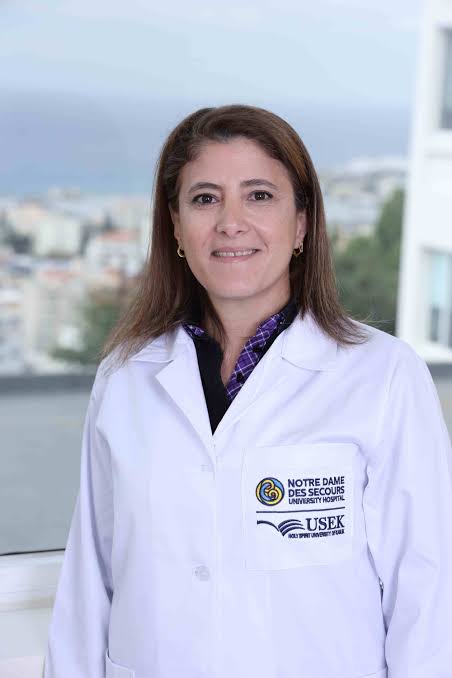
Myriam Amm, MD
Dr. Amm is a prominent Lebanese pediatrician, pediatric gynecologist, and academic. She serves as the Head of the Department of Pediatrics at the Notre Dame des Secours University Hospital (NDSUH) in Byblos, Lebanon. She is widely recognized as a leading referent physician in the specialized field of pediatric gynecology within the country.
Abstract
The first days of life provide a critical opportunity to detect rare diseases before symptoms and irreversible complications develop. Advances in newborn screening, biochemical testing, and genomic technologies are expanding the ability to identify genetic and metabolic disorders at an earlier stage. This presentation will examine current approaches to early detection and discuss how timely diagnosis and intervention can improve clinical outcomes and shift care from treating established disease toward preventing disease-related complications.
Learning Objectives
At the end of this session, learners will be able to:
- Identify rare genetic and metabolic conditions that may be detected through newborn screening before clinical symptoms develop.
- Describe the role of biochemical and genomic technologies in the early detection of rare diseases.
- Evaluate how timely diagnosis and intervention can influence outcomes and prevent disease-related complications.
Lecture 2
Newborn Screening in Lebanon: Three Decades of History and Challenges
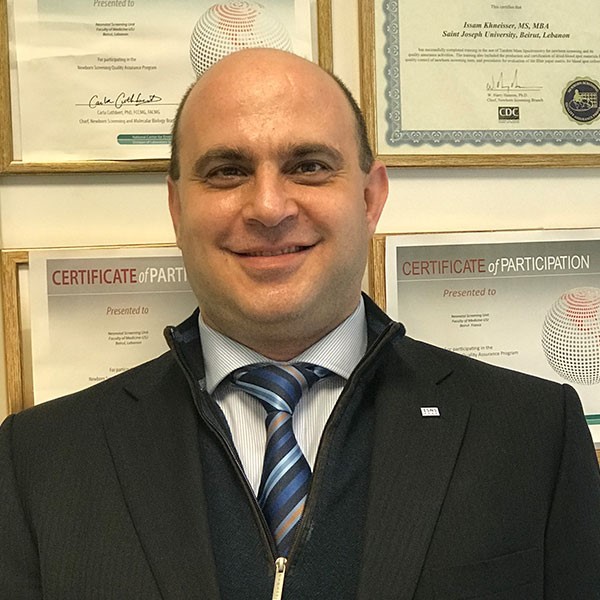
Issam Khneisser, PhD
Dr. Khneisser is a Lebanese researcher and expert in newborn screening. He directs the Newborn Screening Laboratory at Saint Joseph University in Beirut and is a recognized figure in the MENA region for public health genetics programs. A leading voice in newborn screening, he combines scientific research, operational leadership, and regional public health advocacy to improve the health of newborns in Lebanon and throughout the MENA region. He received the Jean Dussault Medal in 2008 for his contribution to newborn screening. He served two terms on the board of directors of the International Society for Newborn Screening (ISNS), representing the Middle East and North Africa, and continues to be actively involved in regional initiatives to improve screening programs. His operational leadership has established the Saint Joseph University laboratory as a regional reference center, supporting diagnostics in numerous countries, including Oman, Iraq, Algeria, Tunisia, Morocco, and Vietnam. His research focuses on newborn screening using blood sampling, inborn errors of metabolism, and metabolic diseases. He has also contributed to studies on population-specific mutations, the regional prevalence of metabolic diseases, and best practices in public health screening. He has been actively involved in international collaborations and has co-authored several publications on newborn screening, including in the International Journal of Neonatal Screening, covering initiatives in the MENA region. Thanks to his efforts, newborn screening programs have developed systematically, progressing from pilot studies to more comprehensive panels using tandem mass spectrometry. He has contributed to establishing quality standards, implementing training programs, and creating technical collaborations to improve early detection and care for newborns.
Abstract
Newborn screening in Lebanon has evolved over the past three decades, contributing to the early detection of inherited and metabolic disorders. Despite this progress, important challenges remain in screening coverage, access to advanced testing, confirmatory diagnosis, follow-up, and equitable implementation. This presentation will review the development of newborn screening in Lebanon, examine current achievements and gaps, and discuss priorities for strengthening a comprehensive and sustainable national screening program.
Learning Objectives
At the end of this session, learners will be able to:
- Describe the evolution of newborn screening in Lebanon and key developments over the past three decades.
- Identify major gaps affecting screening coverage, diagnosis, follow-up, and access to newborn screening services.
- Evaluate priorities for strengthening a comprehensive and equitable newborn screening program in Lebanon.
Lecture 3
Neonatal Screening in Lebanon: An Equity Issue
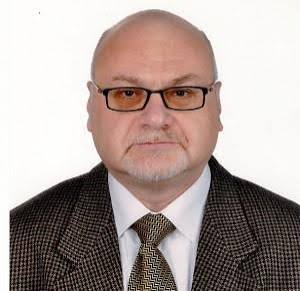
Salim Adib, MD, DrPH American
Dr. Adib is a Professor of Practice in Public Health at the American University of Beirut, with expertise in epidemiology, disease prevention, screening, and public health policy
Abstract
Neonatal screening is essential for the early detection and treatment of rare and potentially preventable disorders. In Lebanon, differences in access to screening, diagnostic services, and follow-up may delay diagnosis and treatment for some newborns. This presentation will examine equity gaps in neonatal screening and discuss practical priorities for improving timely and universal access to screening and subsequent care.
Learning Objectives
At the end of this session, learners will be able to:
- Identify key disparities affecting access to neonatal screening, diagnosis, and follow-up in Lebanon.
- Describe how inequities in screening pathways may contribute to delays in diagnosis and treatment.
- Evaluate priorities for improving equitable and timely access to neonatal screening services.
Lecture 4
Genetic Carrier Burden Assessed by NGS in Neonatal Screening Genes
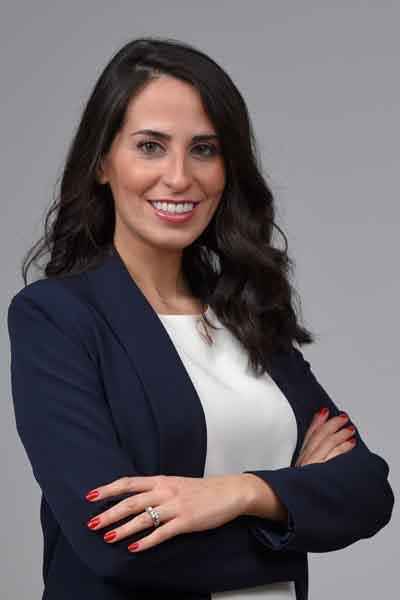
Cybel Mehawej, PhD
Dr. Cybel Mehawej earned her PhD in genetics from Paris Descartes University in 2013 then completed her postdoctoral training in Immunogenetics at Boston Children’s Hospital, Harvard Medical School. She is currently Associate Professor at the Gilbert and Rose-Marie Chagoury School of Medicine at the Lebanese American University.
Dr. Mehawej’s research focuses on the genetic basis of inherited diseases, with a special focus on inborn errors of immunity. She contributed to the discovery of several novel genes, and has authored more than 50 peer-reviewed publications, presented her work at international scientific meetings, and received several distinctions, including the Franco-Lebanese Medical Association Excellence Award (2012), the ASHG Resource-Limited Country Award (2023), and the L’Oréal-UNESCO For Women in Science Levant Young Talent Award (2023).
Abstract
Next-generation sequencing (NGS) can identify pathogenic and potentially pathogenic variants in genes associated with newborn screening disorders, including variants carried by individuals without clinical symptoms. This presentation will examine the genetic carrier burden identified through NGS and highlight the importance of population-specific genomic data. The findings will be discussed in relation to screening strategies, conditions of particular relevance to the Lebanese population, and opportunities for earlier diagnosis and prevention.
Learning Objectives
At the end of this session, learners will be able to:
- Describe the role of next-generation sequencing in identifying genetic variants associated with newborn screening disorders.
- Interpret population-specific genetic data relevant to carrier burden and newborn screening.
- Evaluate how genomic findings may inform screening strategies and early diagnosis in the Lebanese population.
Lecture 5
Assessment of Early Detection Practices for Infants at Risk of Cerebral Palsy in Lebanon: A Cross-Sectional Survey of Multidisciplinary Clinicians
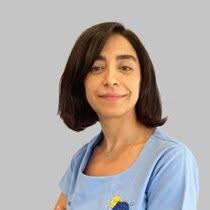
Abir Massaad, PhD
Dr. Massaad is a physiotherapist and academic with expertise in rehabilitation, clinical research, and patient care. Her work focuses on advancing evidence-based rehabilitation and improving outcomes for patients with complex conditions.
Abstract
Early identification of infants at risk of cerebral palsy is essential for timely referral, intervention, and support for children and their families. This presentation reports findings from a cross-sectional survey examining early detection practices among multidisciplinary clinicians in Lebanon. It will highlight current approaches, areas of variation, and potential gaps in the recognition and referral of infants at risk of cerebral palsy, with emphasis on opportunities to strengthen multidisciplinary early detection pathways.
Learning Objectives
At the end of this session, learners will be able to:
- Describe current approaches used by multidisciplinary clinicians in Lebanon to identify infants at risk of cerebral palsy.
- Identify gaps and variations in early detection and referral practices for infants at risk of cerebral palsy.
- Evaluate opportunities to strengthen multidisciplinary approaches to early identification and referral.
Lecture 6
Neonatal Screening and Updates on the Treatment of Neuromuscular Disorders
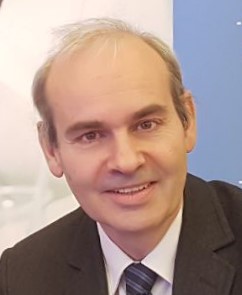
Andoni Urtizberea, MD, MSc
Dr. Urtizberea is a French physician trained in Paris University (1983-1987) and certified both in pediatrics and PMR (physical medicine and rehabilitation). After graduating in parallel from the “Institut d’Etudes Politiques de Paris” in 1987, he served many years as Medical Director of the AFM-Telethon and then as General Delegate of the “Institut de Myologie of Paris”. As Scientific Director of the European Neuromuscular Center in the Netherlands (ENMC, 1999-2005), and with the AFM-Téléthon’s support, he contributed to the establishment of many global networks in myology. He served till December 2019 as part-time clinical myologist in Hendaye Hospital, France (APHP trust) and as deputy coordinator of the French Neuromuscular Network (FILNEMUS) in Marseilles. Over the past twenty years, he headed various worldwide educational events dedicated to myology (in Europe, Russia, Latin America and, more recently in the Middle-East). He is currently a faculty at the Institut de Myologie of Paris, France, running the AcadeMYO project. Ideally located at the intersection of industry, patient advocacy groups and academia, his main objective is to raise more awareness about these rare conditions notably in emerging. In (2016), and together with Prof. Andre Megarbane (Beirut, Lebanon) and Dr. France Leturcq, he co-founded “Myologie Sans Frontières”, a non-profit NGO dedicated to neuromuscular patients in the emerging world.
Abstract
Early detection of neuromuscular disorders through neonatal screening can enable diagnosis and treatment before significant clinical deterioration occurs. Advances in screening approaches and disease-modifying therapies are changing the management of several neuromuscular conditions. This presentation will review current neonatal screening approaches and recent therapeutic advances, with emphasis on how earlier diagnosis can support timely treatment and improve outcomes and quality of life.
Learning Objectives
At the end of this session, learners will be able to:
- Identify neuromuscular disorders that may be considered for neonatal screening.
- Describe current approaches to neonatal detection and diagnosis of neuromuscular disorders.
- Evaluate recent treatment advances and their potential impact on outcomes following early diagnosis.
Lecture 7
Neonatal Screening and SMA
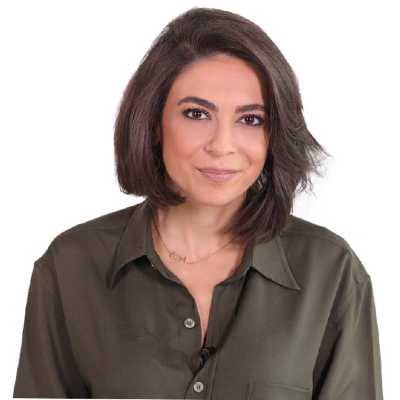
Sandra Sabbagh, MD
Dr. Sabbagh is a physician with an interest in neonatal screening, rare diseases, and early diagnosis, with a focus on improving outcomes through timely detection and intervention.
Abstract
Spinal muscular atrophy (SMA) is a serious neuromuscular disorder in which early diagnosis can significantly influence treatment opportunities and clinical outcomes. Neonatal screening allows affected infants to be identified before the onset of significant symptoms, creating an opportunity for earlier treatment and intervention. This presentation will review the role of neonatal screening for SMA and discuss the clinical importance of early identification and treatment.
Learning Objectives
At the end of this session, learners will be able to:
- Identify the clinical rationale for including spinal muscular atrophy in neonatal screening programs.
- Describe how neonatal screening can facilitate diagnosis of SMA before significant clinical symptoms develop.
- Evaluate the potential impact of early treatment on outcomes for infants with SMA.
Lecture 8
Neonatal Screening and Cancer
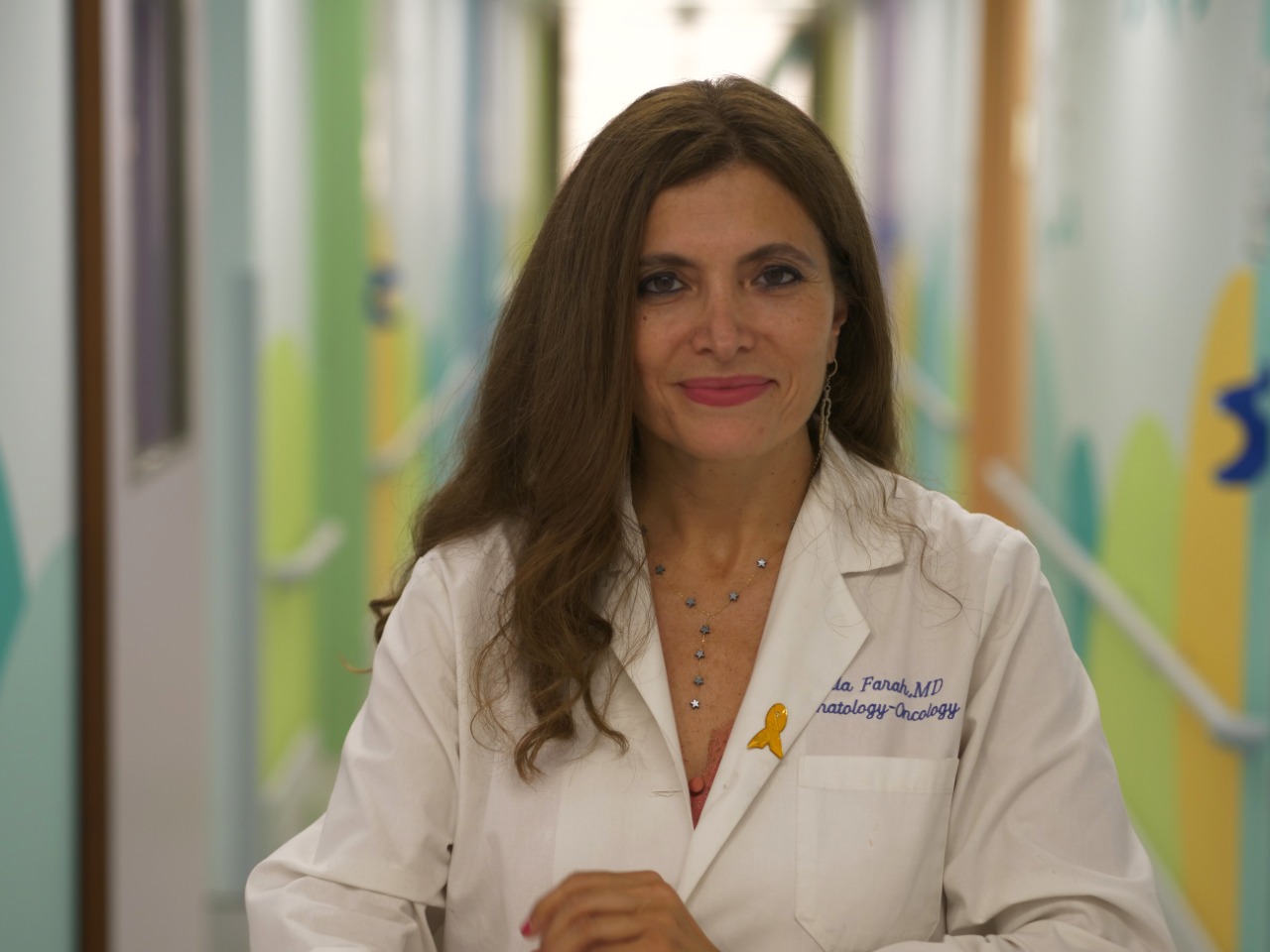
Roula Farah, MD, FAAP
Dr. Farah is a Professor of Medicine in the Department of Pediatrics at the LAU School of Medicine and LAU Medical Center–Rizk Hospital. She is board-certified in Pediatrics and Pediatric Hematology/Oncology and is a Fellow of the American Academy of Pediatrics.
She received her medical degree from Saint Joseph University of Beirut and completed her pediatric training and fellowship in Pediatric Hematology/Oncology in the United States, including at Columbia University, Albert Einstein College of Medicine, and the University of Texas Southwestern Medical Center.
Her clinical and research interests include pediatric brain tumors, leukemia, cancer genetics and inherited cancer predisposition, rare bleeding disorders, and bone marrow failure syndromes. She has numerous publications and has received several awards for her scientific work.
Dr. Farah is the Founder and President of CHANCE and CHANCE International, advocating for children with cancer and promoting cancer awareness. She has also held leadership roles with Childhood Cancer International (CCI), the Lebanese Pediatric Hematology/Oncology Group, and the WHO Global Childhood Cancer Initiative.
Abstract
Advances in genomic medicine are increasing opportunities to identify inherited conditions associated with cancer predisposition at an earlier stage. This presentation will explore the potential role of neonatal genomic screening in identifying infants with genetic susceptibility to cancer and examine the implications for surveillance, prevention, and personalized care. The presentation will also address the clinical, ethical, and practical considerations that should be considered when evaluating genomic screening approaches for cancer predisposition.
Learning Objectives
At the end of this session, learners will be able to:
- Identify genetic conditions that may be associated with increased cancer predisposition and considered in genomic screening.
- Describe potential clinical implications of identifying cancer-predisposition variants early in life.
- Evaluate clinical, ethical, and practical considerations associated with neonatal genomic screening for cancer predisposition.
Lecture 9
Communicating Diagnosis: Clinical and Emotional Challenges
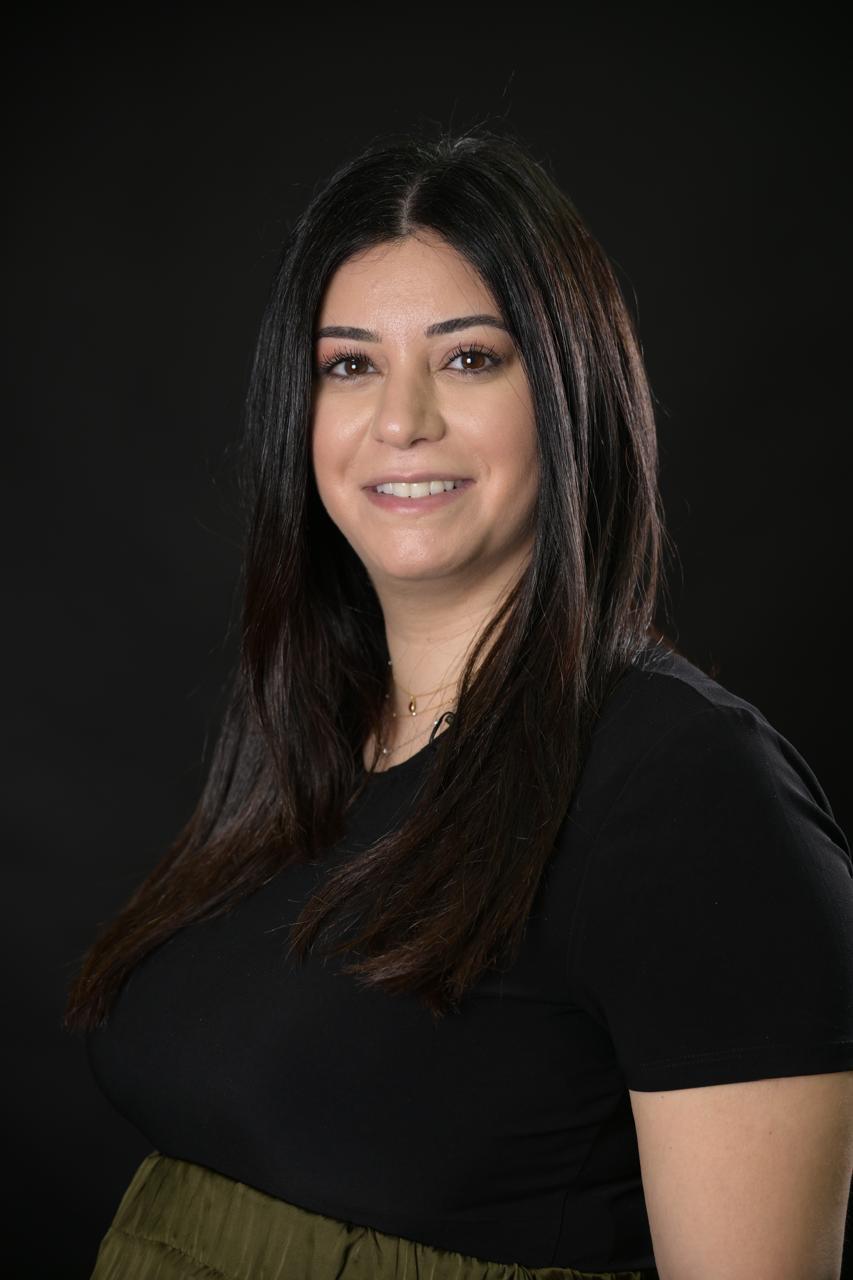
Melanie Wardan, MS
Ms. Wardan is a clinical psychologist specialized in psychoanalytic psychotherapy, recognized for her commitment to fostering emotional well-being and meaningful personal growth. She holds a Master’s degree in Clinical Psychology, along with advanced training in psychoanalytic psychotherapy. Her practice is distinguished by thoughtful clinical insight, reflective practice, and emotional understanding.
Since joining SESOBEL in 2018, Melanie has developed strong expertise in supporting children and young people with disabilities, as well as their families. Her leadership was affirmed in 2020 when she became Head of the Psychology Unit, where she supervises a team of psychologists and actively contributes to the development of services that promote inclusion, resilience, and comprehensive psychological support.
Guided by a deep commitment to care and respect for each individual’s unique journey, Melanie is dedicated to building supportive therapeutic environments and advancing practices that place dignity, compassion, and collaboration at the forefront of mental health work.
Abstract
Communicating a diagnosis of a rare or serious condition to families can present significant clinical and emotional challenges for healthcare professionals. Families may experience uncertainty, anxiety, grief, and difficulty understanding complex diagnostic information, particularly when a diagnosis is made through neonatal screening before symptoms become apparent. This presentation will explore approaches to communicating difficult diagnoses, addressing emotional responses, and supporting families throughout the diagnostic and care process.
Learning Objectives
At the end of this session, learners will be able to:
- Identify common emotional and psychosocial responses experienced by families following a diagnosis of a rare or serious condition.
- Apply communication strategies to effectively convey complex diagnostic information to children and families.
- Evaluate approaches for addressing family concerns and providing appropriate psychosocial support following diagnosis.